








Industry News
How to Use a Backhoe: Controls Explained Simply
May
Backhoes are among the most versatile machines used in construction, landscaping, agriculture, roadwork, and utility projects. Their ability to dig, lift, load, and move materials makes them essential equipment on job sites around the world.
For beginners, however, learning how to operate a backhoe can seem intimidating because of the multiple controls, hydraulic functions, and machine movements involved. The good news is that once you understand the purpose of each control and practice the basic movements, operating a backhoe becomes much easier.
This guide explains backhoe controls in simple terms, helping new operators understand how the machine works and how to perform common tasks efficiently and safely.
Understanding the Main Parts of a Backhoe
Before learning the controls, it is important to understand the major components of the machine.
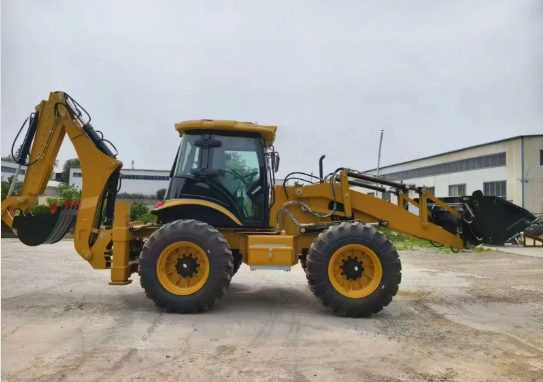
A backhoe loader typically consists of three main sections:
- Front loader bucket
- Central operator cab
- Rear backhoe attachment
The front loader is primarily used for moving soil, gravel, sand, and other materials.
The rear backhoe is designed for digging trenches, excavating foundations, and performing precision earthmoving work.
The operator cab contains all controls needed to manage machine movement and hydraulic functions.
Understanding how these parts work together makes learning the controls much simpler.
Getting Familiar with the Operator’s Seat
Most backhoes are equipped with a rotating or adjustable seat that allows the operator to face either the front loader or the rear backhoe attachment.
When driving the machine or operating the loader bucket, the operator faces forward.
When performing excavation work with the backhoe, the seat is rotated to face the rear.
Before starting work, take time to identify:
- Steering wheel
- Pedals
- Loader control lever
- Backhoe control levers
- Stabilizer controls
- Gear selector
- Parking brake
Knowing the location of each control helps build confidence and improves efficiency.
Understanding Loader Controls
The front loader bucket is usually controlled by a joystick or lever located beside the operator.
The loader control performs two main functions:
Raise and Lower the Loader Arms
Moving the control backward generally raises the loader arms.
Pushing the control forward lowers them.
Curl and Dump the Bucket
Moving the joystick left or right typically controls bucket angle.
Curling the bucket inward helps retain material.
Tilting it forward allows the material to be dumped.
These two functions work together during loading operations.
With practice, operators can smoothly scoop, carry, and unload materials.
Understanding Stabilizer Controls
Before operating the rear backhoe attachment, the machine must be stabilized.
Stabilizers are hydraulic legs located on both sides of the machine’s rear section.
Their purpose is to:
- Improve stability
- Reduce machine movement
- Increase digging efficiency
- Enhance operator control
Separate control levers allow operators to raise and lower each stabilizer independently.
When preparing to dig, both stabilizers should be lowered firmly to the ground until the machine is stable.
This creates a secure working platform for excavation tasks.
Understanding Backhoe Boom Controls
The boom is the large primary arm attached to the rear of the machine.
The boom control moves the entire digging arm up and down.
Pulling the control generally raises the boom.
Pushing the control lowers it.
The boom provides the main lifting power during excavation and material handling operations.
Learning smooth boom movement is one of the first skills new operators should develop.
Understanding the Dipper Stick Controls
Attached to the boom is the dipper stick, sometimes called the crowd arm.
The dipper stick extends the digging reach of the backhoe.
The control typically performs two actions:
- Extend the arm outward
- Retract the arm inward
Extending increases digging reach.
Retracting pulls material toward the machine.
Proper coordination between the boom and dipper stick creates efficient digging movements.
Understanding Bucket Controls
The bucket is located at the end of the dipper stick and performs the actual digging.
Bucket controls allow operators to:
- Open the bucket
- Close the bucket
- Scoop material
- Release material
When digging, operators lower the bucket into the soil and curl it inward to collect material.
The bucket control is one of the most frequently used functions during excavation.
Mastering bucket movements significantly improves productivity.
Understanding Swing Controls
The swing function allows the entire backhoe attachment to rotate left and right.
This movement is essential for transferring excavated material.
After filling the bucket:
- Lift the boom.
- Swing left or right.
- Position over the dumping area.
- Empty the bucket.
The swing control enables efficient excavation without moving the entire machine.
Smooth swing operation improves accuracy and cycle times.
Basic Digging Sequence for Beginners
New operators often learn faster by following a simple digging sequence.
Step 1: Lower stabilizers.
Step 2: Position the boom over the digging area.
Step 3: Extend the dipper stick.
Step 4: Lower the bucket into the ground.
Step 5: Curl the bucket to collect material.
Step 6: Retract the dipper stick.
Step 7: Raise the boom.
Step 8: Swing toward the spoil pile.
Step 9: Dump the material.
Step 10: Return to the starting position.
Repeating this sequence helps develop coordination and machine control.
Coordinating Multiple Movements
Experienced operators rarely move only one control at a time.
Instead, they combine several hydraulic functions simultaneously.
For example, during excavation, an operator may:
- Lower the boom
- Retract the dipper stick
- Curl the bucket
all in one smooth motion.
This coordination increases efficiency and creates smoother machine operation.
Beginners should first master individual movements before combining multiple functions.
Tips for Improving Backhoe Control Skills
Developing good operating habits can accelerate learning.
Helpful tips include:
Practice Slowly
Focus on accuracy before speed.
Use Smooth Movements
Avoid sudden joystick actions.
Watch the Bucket
Monitor bucket position continuously.
Learn Machine Response
Every backhoe responds slightly differently.
Practice in Open Areas
Use spacious training areas whenever possible.
Stay Consistent
Frequent practice improves muscle memory and control precision.
Common Tasks Performed with a Backhoe
Once operators understand the controls, a backhoe can perform many different tasks.
Common applications include:
- Trenching
- Foundation excavation
- Utility installation
- Landscaping
- Material loading
- Site preparation
- Drainage projects
- Agricultural work
Its versatility makes the backhoe one of the most valuable machines in construction equipment fleets.
Safety Considerations During Operation
Safe operation should always remain a priority.
Operators should:
- Perform pre-operation inspections
- Wear appropriate protective equipment
- Verify surrounding conditions
- Maintain clear visibility
- Follow manufacturer guidelines
- Use stabilizers properly
- Monitor load limits
Good safety practices help improve productivity while protecting equipment and personnel.
Building Confidence Through Practice
Learning backhoe controls requires patience and repetition.
Most new operators quickly become comfortable once they understand the purpose of each lever and hydraulic function.
Regular practice helps develop:
- Better coordination
- Smoother movements
- Greater precision
- Faster cycle times
- Increased productivity
With experience, operating a backhoe becomes a natural and highly rewarding skill.
Understanding backhoe controls does not have to be complicated. By learning the functions of the loader controls, stabilizers, boom, dipper stick, bucket, and swing system, new operators can quickly build a solid foundation for successful machine operation.
The key to mastering a backhoe is practicing basic movements, developing coordination, and maintaining a strong focus on safety. As skills improve, operators can perform digging, loading, lifting, and excavation tasks with greater confidence and efficiency.
Whether working in construction, landscaping, agriculture, or utility projects, understanding backhoe controls is the first step toward becoming a capable and productive equipment operator.