









Industry News
Why a 20 Ton Excavator Is Ideal for Infrastructure Projects
Jun
Infrastructure development requires construction equipment that delivers reliability, efficiency, and versatility under demanding job site conditions. Among the various categories of earthmoving machinery, the 20 ton excavator has become one of the most widely used solutions for infrastructure projects. Its balanced combination of digging power, operational flexibility, transport convenience, and fuel efficiency makes it suitable for projects ranging from road construction and utility installation to bridge foundations and urban development.
As governments and private developers continue investing in transportation networks, energy facilities, municipal infrastructure, and industrial construction, contractors increasingly seek equipment that maximizes productivity while maintaining consistent performance across different applications. A 20 ton excavator meets these expectations by offering an excellent balance between heavy-duty capability and maneuverability. This article explores why this machine size remains one of the preferred choices for modern infrastructure projects.
The Perfect Balance Between Power and Mobility
A 20 ton excavator occupies the sweet spot between compact excavators and larger mining-class machines. It delivers substantial digging force and lifting capacity while remaining mobile enough to operate efficiently on a wide variety of construction sites.
Infrastructure projects often involve changing working environments. Operators may excavate foundations in open areas one day and work alongside existing roads, buildings, or underground utilities the next. The moderate machine size allows easier transportation between sites and provides sufficient flexibility for projects with varying space limitations.
Its optimized dimensions also simplify logistics, reducing transportation complexity while maintaining high productivity throughout the project lifecycle.
Excellent Digging Performance for Diverse Applications
Infrastructure construction requires excavation under many different soil conditions. A 20 ton excavator offers impressive breakout force, stable hydraulic performance, and efficient bucket operation that allow it to perform consistently across multiple applications.
Whether digging trenches for water pipelines, preparing foundations for commercial buildings, excavating drainage systems, or grading roadbeds, the machine delivers reliable performance with minimal interruption.
Modern hydraulic systems provide smooth and precise control, allowing operators to complete detailed excavation work while maintaining high productivity during larger earthmoving tasks.
The combination of power and precision enables contractors to complete projects more efficiently while achieving accurate excavation profiles that meet engineering specifications.
High Productivity with Lower Operating Costs
Construction companies continuously evaluate equipment based on productivity and total operating cost. A 20 ton excavator provides an excellent balance between output and resource consumption.
Its engine is designed to deliver sufficient power without unnecessary fuel consumption. Advanced hydraulic management systems further improve efficiency by distributing power according to operational demand.
Reduced idle time, optimized cycle speeds, and responsive controls contribute to faster loading, digging, and material handling operations.
Routine maintenance is also designed with accessibility in mind. Easily accessible service points simplify daily inspections and scheduled maintenance, helping keep equipment available for longer operating hours.
These operational advantages contribute to improved project scheduling and enhanced equipment utilization.
Versatility Across Infrastructure Projects
One of the greatest strengths of a 20 ton excavator is its versatility. Instead of serving only one specific purpose, it can support multiple stages of infrastructure development.
Road construction projects require excavation, grading, slope shaping, and drainage installation. Municipal utility projects involve trenching for water, sewer, gas, electrical, and communication lines. Bridge construction demands foundation excavation, material handling, and site preparation.
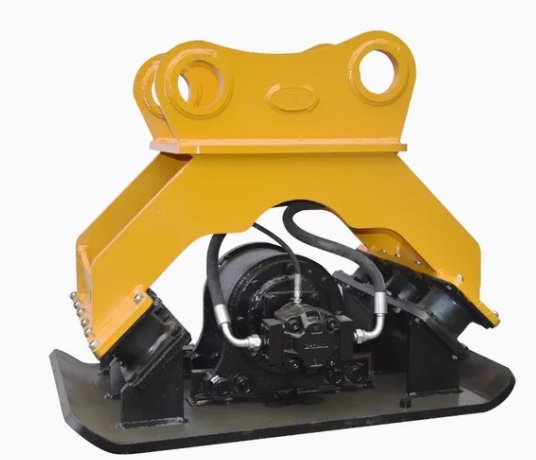
With compatible attachments such as hydraulic breakers, augers, grapples, compactors, and various bucket sizes, the same excavator can perform multiple tasks without requiring additional specialized machines.
This flexibility allows contractors to improve equipment utilization while simplifying fleet management.
Superior Stability and Safety During Heavy Operations
Infrastructure projects frequently involve lifting heavy materials, handling large pipes, positioning concrete components, and excavating deep foundations. Machine stability plays an essential role in maintaining operational efficiency.
A 20 ton excavator features a well-balanced undercarriage that provides excellent stability during digging, lifting, and swing operations.
Advanced hydraulic systems ensure smooth movement, reducing sudden load shifts and allowing operators to position materials with greater precision.
Modern cabins are designed to improve visibility, operator comfort, and control. Ergonomic controls reduce operator fatigue during extended working hours, while integrated monitoring systems provide real-time information on machine performance and maintenance status.
These features contribute to safer and more productive job site operations.
Adaptability to Urban and Rural Construction Environments
Infrastructure projects are not limited to large open construction sites. Many projects take place within cities where space constraints, traffic management, and existing utilities require equipment with excellent maneuverability.
A 20 ton excavator is compact enough to work efficiently in urban environments while still providing sufficient power for demanding excavation work.
In rural infrastructure development, including highways, irrigation systems, renewable energy facilities, and industrial parks, the same machine offers the durability and reach required for continuous heavy-duty operation.
This adaptability makes it a valuable investment for contractors serving multiple sectors.
Supporting Sustainable Construction Practices
Sustainability has become an important consideration in modern construction. Equipment manufacturers continue improving engine technology, hydraulic efficiency, and emissions performance to reduce environmental impact.
Many modern 20 ton excavators incorporate intelligent engine management systems that optimize fuel usage while maintaining productivity.
Efficient hydraulic circuits minimize wasted energy, while advanced cooling systems improve long-term reliability under demanding operating conditions.
Long service intervals, durable structural components, and recyclable materials further support sustainable equipment ownership by extending machine life and reducing resource consumption.
As infrastructure projects increasingly emphasize environmental responsibility, these efficiency improvements provide additional value throughout the equipment lifecycle.
Long-Term Value for Contractors
Purchasing construction equipment is a long-term investment. Contractors evaluate machinery not only by initial acquisition cost but also by reliability, productivity, maintenance efficiency, and resale potential.
A 20 ton excavator consistently performs across a wide range of applications, making it one of the most utilized machines in many equipment fleets.
Its versatility reduces the need for multiple specialized machines, while dependable performance supports continuous project execution across changing work conditions.
Well-designed hydraulic systems, durable structural components, and efficient powertrains contribute to long service life when maintained according to manufacturer recommendations.
For contractors seeking equipment capable of supporting infrastructure development over many years, the 20 ton excavator delivers outstanding operational value and dependable performance.
Infrastructure construction demands equipment that combines strength, efficiency, flexibility, and reliability. The 20 ton excavator successfully meets these requirements by offering powerful digging performance, excellent mobility, versatile attachment compatibility, stable operation, and economical ownership.
From transportation infrastructure and municipal utilities to industrial developments and renewable energy projects, this machine continues to demonstrate its ability to adapt to diverse construction environments.
As infrastructure investment continues expanding worldwide, the 20 ton excavator remains one of the most practical and productive choices for contractors aiming to improve project efficiency, maintain consistent performance, and achieve long-term operational success.